
The Health of Your Teeth


Dental Caries
Dental caries is a prevalent, transmissible, chronic infectious disease resulting from tooth-adherent cariogenic bacteria that metabolize sugars to produce acid, which, over time, demineralizes tooth structure. The bad guy - Streptococcus mutans. This bacteria interacts with food debris and sugars in the mouth to form acid which breaks down healthy tooth structure.
Tooth Anatomy
The tooth has normal grooves, pits, and fissures. Some teeth are formed with deeper grooves than others. These deeper grooves are more difficult to clean and become a food trap allowing bacteria to thrive.
Diet
Did you know that early hunter-gatherers had little-to-no cavities? It was from the introduction of carbohydrates, grains, and sugars that allowed harmful bacteria to thrive in our mouths. Reducing consumption of sugars and avoiding acidic foods help in the reduction of dental cavities.
Remineralization Properties of Fluoride
The benefits of fluoride were established in the early 1900s. The enamel is the strongest substance our body makes and is the outer protective layer of our teeth. Ameloblasts are the cells responsible of laying down enamel during tooth formation. During amelogenesis, the formation of enamel, half of the ameloblasts are lost. Furthermore, upon tooth eruption, the other half of the ameloblast are lost. Thus, our enamel has no reparative function.
Fluoride has multiple benefits. It remineralizes your tooth enamel in addition to reversing early incipient tooth decay. It slows down the process of demineralization and slows the growth of cavity-causing (cariogenic) bacteria. If you are at high risk of developing dental caries, a prescription toothpaste is recommended.
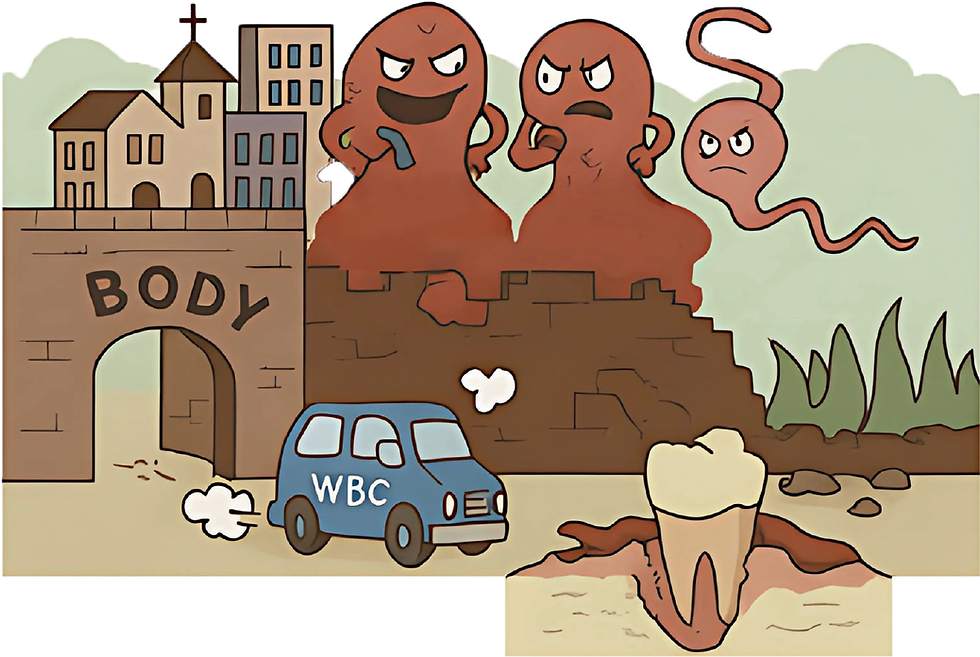
Think of your mouth as a neighborhood, and each tooth as a home on the block.
The Unwanted Guests
In this once peaceful neighborhood, moves in a bacteria called Streptococcus mutans. These bacteria love sugar. When they have sugar delivered to the neighborhood, they “party” and leave behind acid waste and trash all over the neighborhood. This acidic trash slowly chips away at the strong outer walls of the tooth (the enamel).
Layers of Damage
The acidic waste continues to cause damage and slowly starts to seep into the house.
Enamel (the outdoor paint): First weakened by acid.
Dentin (the wooden frame): Softer and easier for decay to spread and penetrate.
Pulp (the living room with the family inside): Where the nerve the blood vessels live. Once bacteria reach here, pain and infection begins.
If the pulp becomes infected, the bacteria can spread beyond the tooth into the gums, bone, and even other parts of the body.
How the Trouble Spreads
House to House: The acid waste started at one house but slowly seeps into the yard of the neighbor until it continues to accumulate to the point of touching the other house. If two teeth touch, acid damage begins to spread to both - what dentists call a “kissing lesion.”
To Other Neighborhoods: These bacteria are transmissible and hop onto cars to travel to a completely new neighborhood, the afterparty. Likewise, cariogenic bacteria can be passed from one person to another by sharing utensils, drinks, or kissing.


Comments